Roof Repair Guides for Maryland Homeowners
Most roof problems don't need a new roof — they need the right repair and the right information. These guides explain how leaks actually start, what common repairs cost in Maryland, and how to tell a few-hundred-dollar fix from a five-figure replacement pitch.
- Finding where leaks really start
- Flashing, pipe boots, and ridge vents, explained
- Storm damage: repair it or claim it?
- Flat roof coatings for Baltimore rowhouses
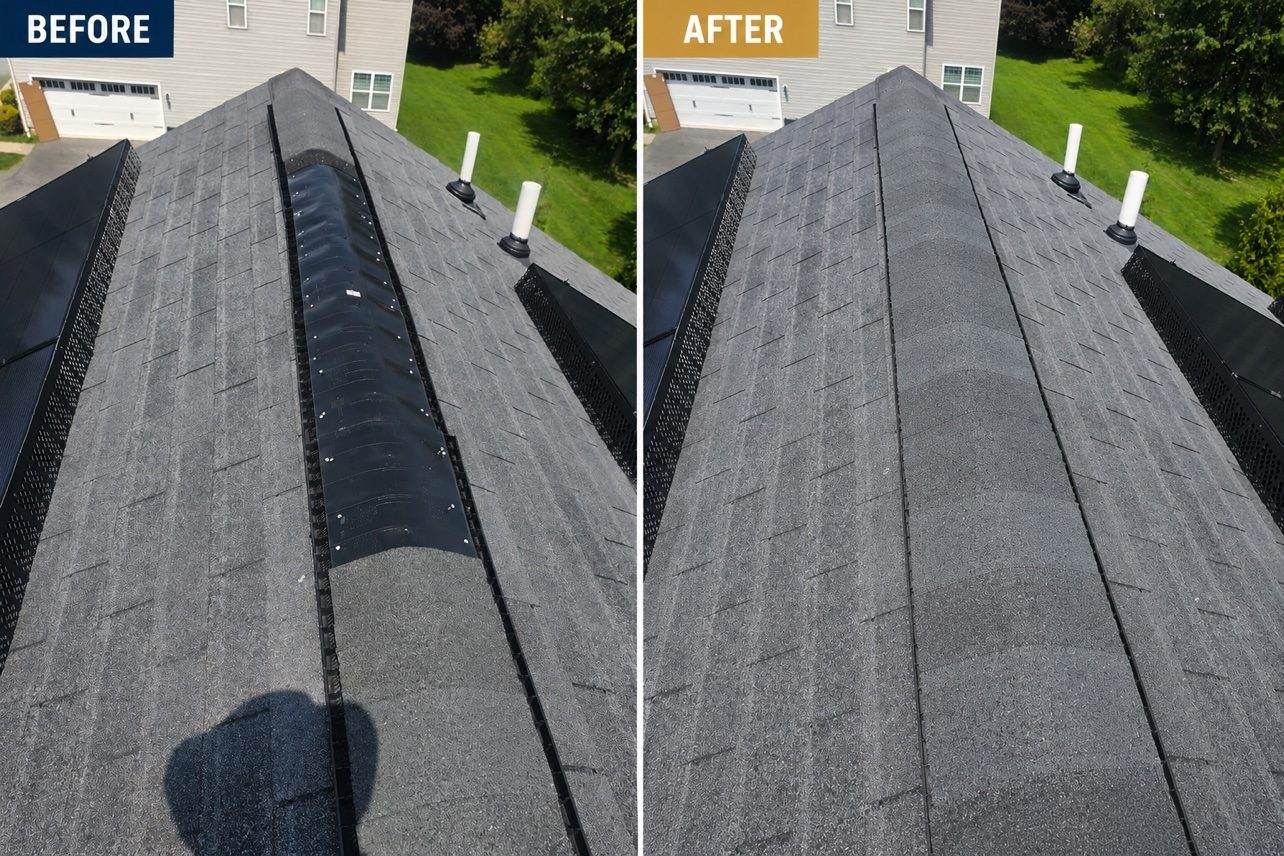
The examples and photos in these guides come from real Maryland roofs — flat rowhouse roofs in Baltimore and shingle roofs across Howard County — so the costs and details reflect this region's weather and housing stock, not national averages.
Roof Repair guides
How Much Does Roof Repair Cost in Maryland?
Real Maryland ballparks for common roof repairs: pipe boots, flashing, shingle patches, ridge vents, and skylights. Typical range $300-$2,500, plus what drives your price.
Read the guide →Signs Your Roof Needs Repair (Not a Whole New Roof)
Most roof problems are cheap fixes if caught early. Here's how to check your shingles, flashing, vents, and attic — and tell repair from replacement.
Read the guide →Roof Repair vs. Roof Replacement: How to Tell What You Actually Need
Most roofs don't need full replacement. An honest framework for deciding between roof repair and roof replacement — age, decking, damage, and the cost math.
Read the guide →Flat Roof Coating: The Baltimore Rowhouse Guide
Baltimore rowhouses mostly have flat roofs. Here's how elastomeric roof coatings work — when a recoat saves your roof, when it can't, prep, lifespan, and Maryland costs.
Read the guide →Frequently Asked Questions
What is the most common roof repair in Maryland?
Failed pipe boots — the rubber seals around plumbing vent pipes — cause more Maryland roof leaks than almost anything else. The rubber dries and splits after roughly 8 to 12 years of sun and temperature swings, letting water track down the pipe into the attic. Flashing failures around chimneys and walls, lifted shingles after wind storms, and leaking ridge vents round out the list. The good news: all of these are repairs, not replacements, and most cost a few hundred dollars when caught early.
Can a leaking roof be repaired, or does it need to be replaced?
Most leaks can be repaired. A leak is usually a local failure — one flashing detail, one vent boot, one damaged area — while the rest of the roof still has years of life. Replacement makes sense when problems are widespread: shingles losing their granules everywhere, soft or rotten decking in multiple areas, or a roof simply at the end of its service life. A useful guideline is the 40% rule: if honest repair quotes approach 40% of a replacement price, replacement deserves a serious look.
How long should a roof repair last?
A properly done repair should last as long as the surrounding roof. Replacing a pipe boot with a quality boot, re-flashing a chimney with metal flashing set into the mortar joint, or resealing a skylight perimeter are permanent fixes, not patches. Repairs that rely on surface tar or caulk smeared over shingles are the exception — those are temporary, often lasting a season or two. When you get a repair quote, ask what materials are being used and whether the fix is mechanical (new flashing, new boot) or just sealant.
Does homeowners insurance cover roof repairs?
It depends on the cause. Sudden, accidental damage — wind tearing off shingles, a tree limb puncturing the roof, hail — is typically covered, minus your deductible. Damage from age, wear, and slow leaks is considered maintenance and is not covered. If you suspect storm damage, document it with dated photos before any cleanup, and check your policy's deductible: for a small repair, the cost may fall below the deductible anyway, making a claim pointless.
Can roof repairs be done in the winter?
Yes — most common repairs, including pipe boots, flashing work, and emergency leak stops, can be done year-round in Maryland. There are limits: shingles get brittle in deep cold and need careful handling, and some sealants and coatings need temperatures above roughly 40–50°F to cure properly. Flat roof coatings in particular are warm-weather work. A winter leak is still worth addressing immediately, even if the permanent version of the repair waits for a mild day.
How can I tell where a roof leak is coming from?
Water rarely drips straight down from the entry point — it runs along decking, rafters, and pipes before it shows up as a ceiling stain, sometimes several feet away. Start in the attic during or just after rain with a flashlight, looking upslope from the stain. The usual suspects are penetrations and transitions: vent pipes, chimneys, skylights, valleys, and anywhere the roof meets a wall. Our guide to the signs a roof needs repair walks through the ground-level and attic checks in order.
Questions or a Topic Idea?
Email us — reader questions shape the guides we publish next.
[email protected] Browse the Guides