Flat Roof Coating: The Baltimore Rowhouse Guide
Bmore Exteriors participates in affiliate programs — if you buy through our links, we may earn a commission at no extra cost to you. Learn more.
If you own a Baltimore rowhouse, your roof is almost certainly flat — technically low-slope, just enough pitch to drain. Thousands of rowhouses share the same anatomy: a membrane surface (often modified bitumen, sometimes EPDM rubber or older built-up roofing), a parapet wall around the edges, and a drain or scupper to get water off.
If that roof is getting old, you've probably heard the pitch for roof coating — elastomeric or silicone coating. It's real, it works, and it's often the smartest money a rowhouse owner can spend. But it doesn't work in every situation. Here's what coatings are, when they're the right call, when they aren't, and what the job involves.
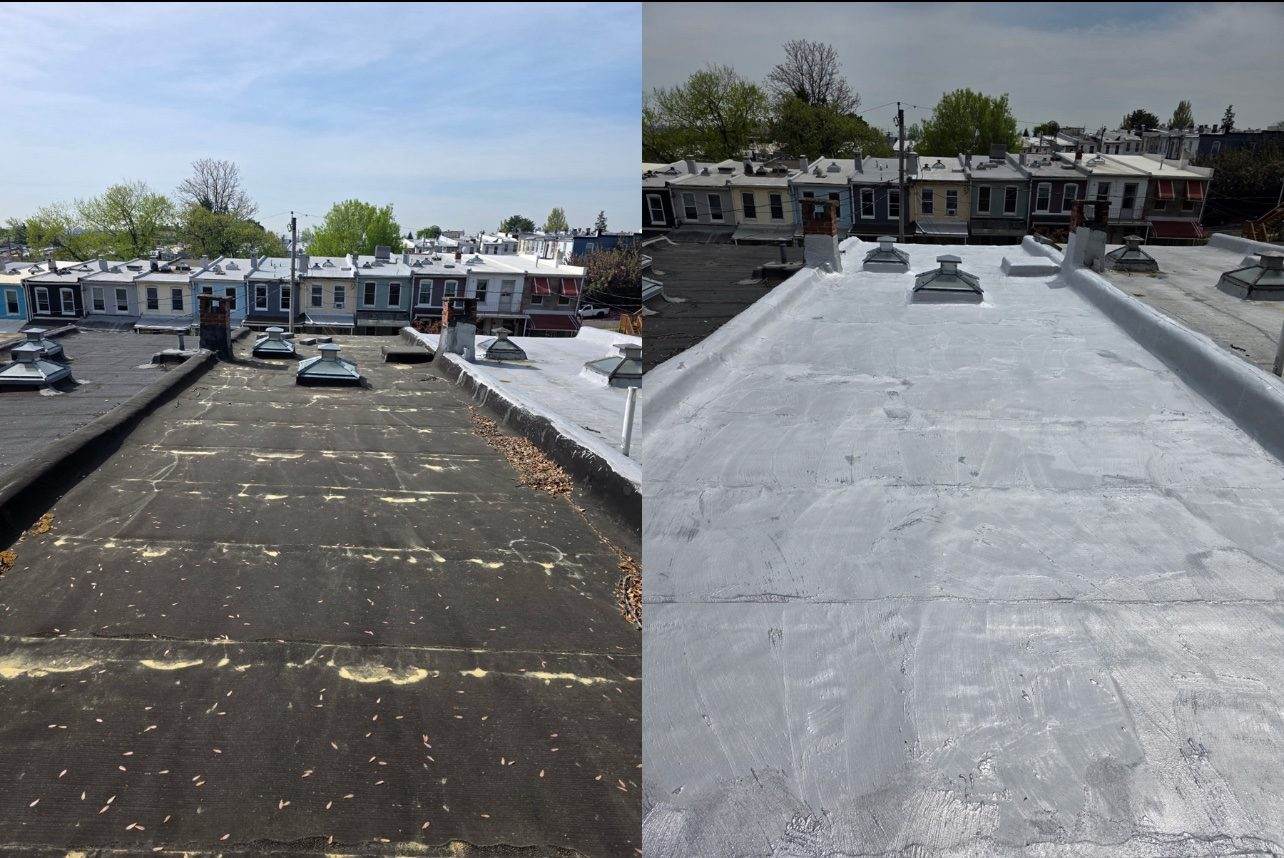
What Is an Elastomeric Roof Coating?
A roof coating is a thick, liquid-applied membrane — heavy-duty paint engineered for roofs. Rolled or sprayed on in one or two coats over the existing roof, it cures into a seamless, rubbery, waterproof layer.
The two main types you'll hear about:
Acrylic/elastomeric coatings are water-based, affordable, and widely used — flexible, reflective in white, easy to recoat. Weakness: standing water. On roofs that pond for days after rain, acrylic can re-emulsify and break down.
Silicone coatings cost more but shrug off ponding water — essentially waterproof in a way acrylics aren't. They hold up well on roofs with minor drainage imperfections. Downsides: price, and they're harder to recoat later without the right primer.
Which one fits depends on your roof's drainage and your budget.
When Coating Works
A coating is a restoration, not a resurrection. It works when the underlying roof is basically sound but weathered. Specifically:
- The membrane is intact — no large tears, no missing sections, no widespread blistering
- Ponding is minor — small puddles that drain within 24 to 48 hours after rain
- The roof structure is solid — no sagging between supports, no bounce underfoot
- Leaks, if any, are minor and traceable — a seam here, a flashing detail there
- The insulation underneath is dry
This describes a lot of Baltimore rowhouse roofs: a 15-year-old modified bitumen roof that's lost its granules and looks tired but isn't leaking is an ideal candidate. It's the roof equivalent of repainting a house whose siding is sound but sun-faded.
When Coating Can't Save It
Coating a roof that needs replacement is money thrown away. A coating cannot fix:
Saturated insulation. If water has soaked the insulation under the membrane, no surface coating will dry it out. Spongy spots that compress underfoot mean wet insulation. Cut a test patch and squeeze: if water comes out, coating is off the table.
Major ponding. Puddles that sit for days, or areas where the roof visibly sags and holds water. A coating follows the surface — it doesn't level it. Standing water defeats acrylic coatings within a few seasons and stresses even silicone.
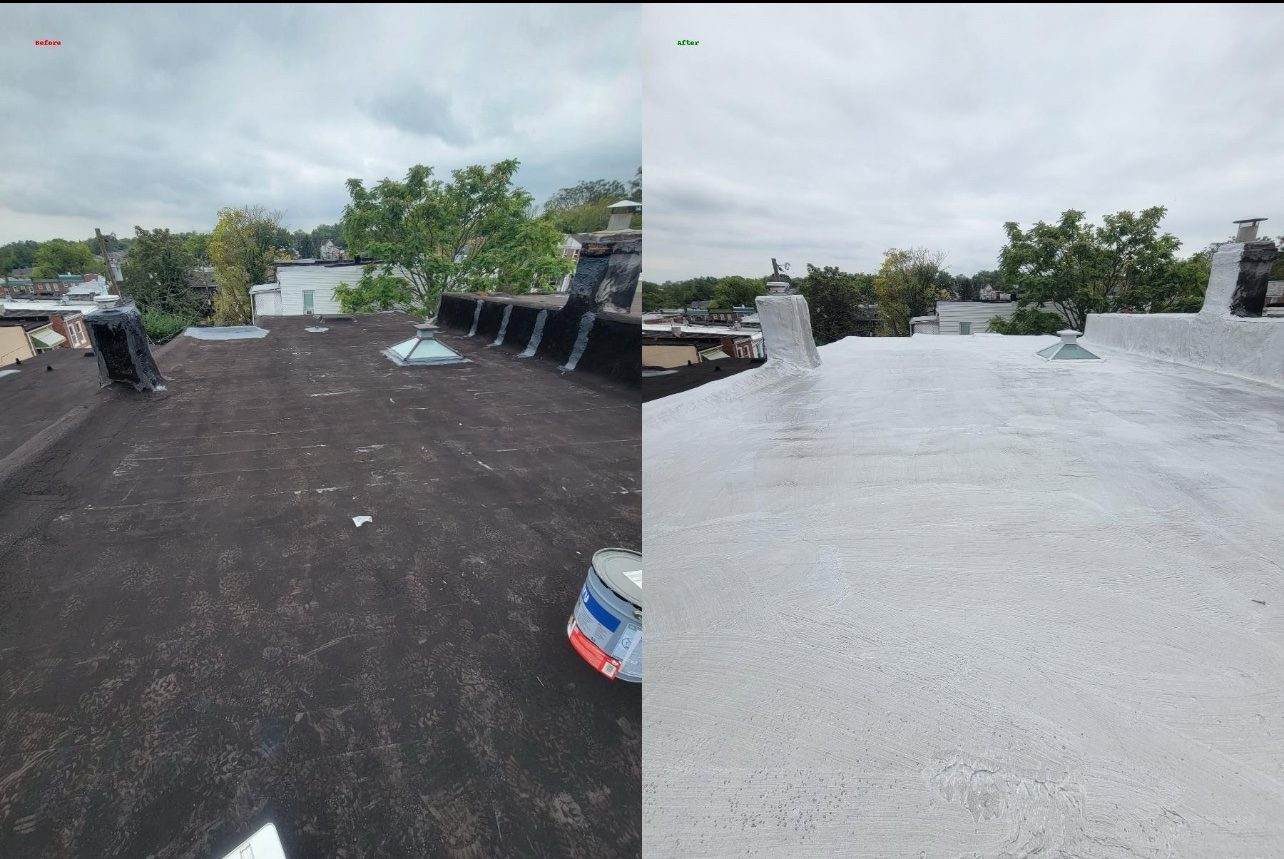
Deck rot or structural sag. Rotted wood decking or a roof sagging between supports is a structural problem. No coating addresses that — it needs a tear-off and rebuild.
Widespread membrane failure. Large-scale blistering, alligatoring (a cracked pattern across the surface), or membrane pulling away from parapets and flashings in many places. A coating is only as good as what it's stuck to.
A good contractor tells you which situation you're in before quoting the coating. A quote without a roof walk — no check for soft spots or ponding — is a guess.
What the Job Actually Involves: Prep Is Everything
A coating job is roughly 70% preparation, 30% application. Prep is what makes it last 10 to 15 years instead of peeling in three:
1. Deep cleaning. The roof gets power-washed, not just swept. Dirt, loose granules, algae, and chalky oxidation all come off — the coating bonds to the surface, and any contamination becomes a weak layer. This is the step most often shortchanged.
2. Repairs first. Blisters get cut and patched, open seams sealed, flashing at parapets, drains, and penetrations inspected and repaired. A coating seals a sound roof; it doesn't substitute for fixing what's broken.
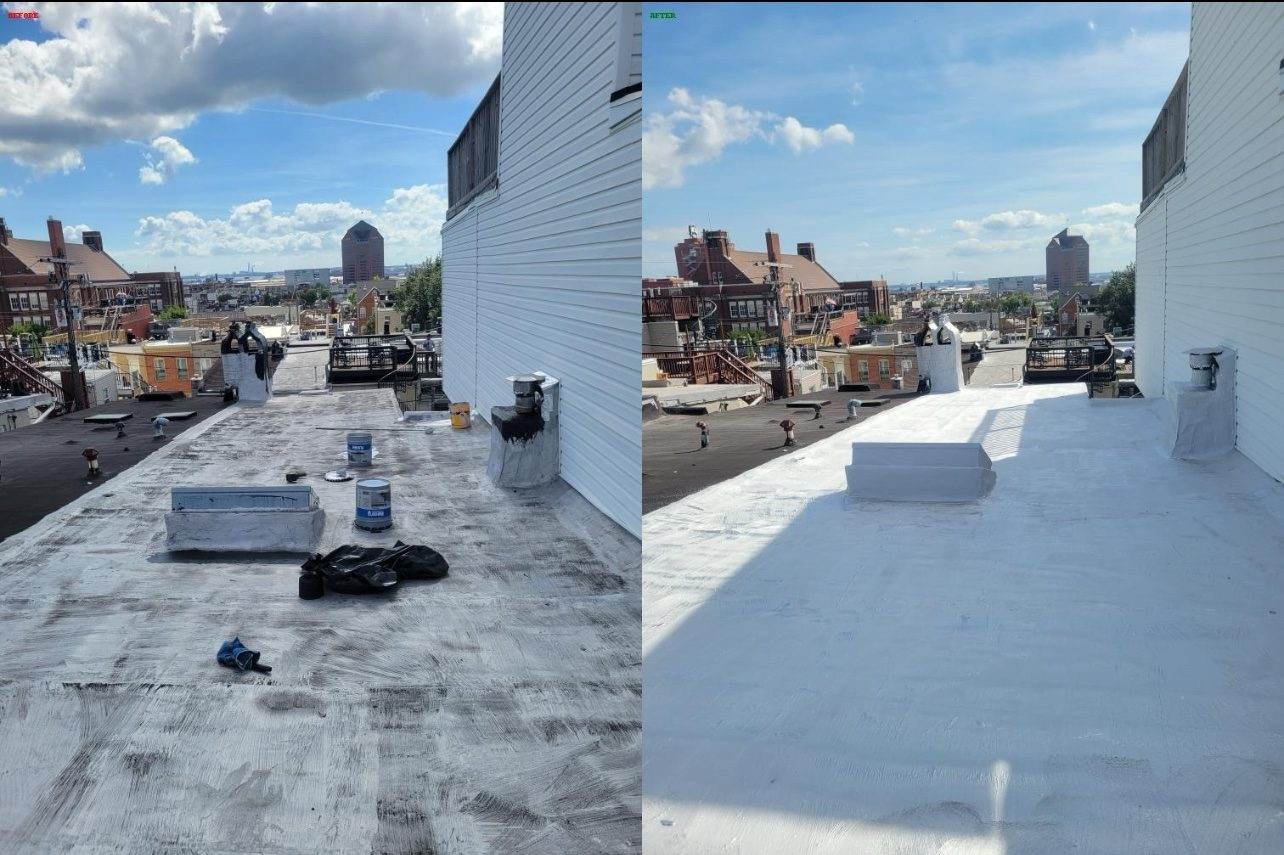
3. Priming. Most systems call for a primer matched to the membrane —
EPDM roof primer
Affiliate link placeholder — real link added later.is its own product for a reason. Skipping primer is the most common shortcut in cheap coating jobs — and the one most likely to cause premature failure.
4. Detail work. Seams, penetrations, and flashing transitions get reinforced — often with polyester fabric embedded at stress points, the areas that move most and fail first.
5. Application. Two coats by roller or spray at the manufacturer's specified thickness (dry film thickness in mils matters more than gallons used). A 5-gallon bucket of
elastomeric roof coating
Affiliate link placeholder — real link added later.covers roughly 50 to 100 square feet per coat, so coverage math is part of any honest quote.
6. Cure time. The coating needs 24 to 48 hours of dry weather to cure — in Maryland, that means scheduling around the forecast, especially in spring and fall.
Lifespan: What to Expect
A properly prepped coating system lasts 10 to 15 years in Maryland conditions — silicone toward the longer end, acrylic toward the shorter end on roofs with any ponding.
Two things extend coating life most: prep quality and maintenance. A coated roof isn't maintenance-free — annual inspections, clear drains and scuppers, and touch-ups on damaged spots keep it intact. When the coating weathers, it can often be recoated with a fresh topcoat, extending total service life without a tear-off.
The Summer Energy Benefit
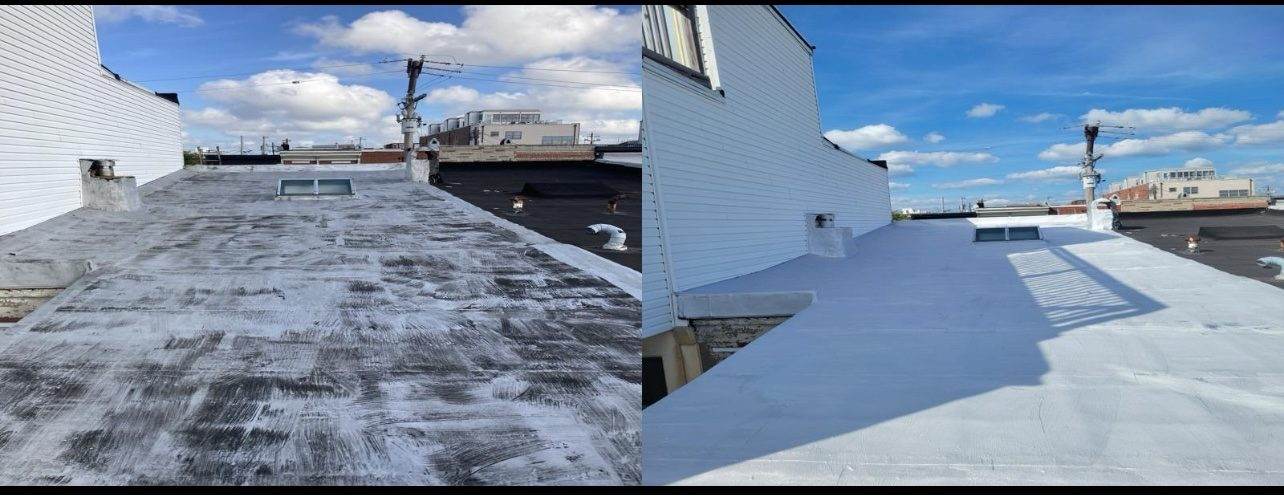
Most coatings go on white, and that's not cosmetic. White reflects a large share of solar heat instead of absorbing it into the roof assembly. On a rowhouse top floor — which anyone who's lived in one knows bakes in July and August — that means a noticeably cooler upstairs and lower AC load.
Maryland's humid summers make this a real benefit. It's not going to halve your cooling bill, but homeowners consistently report the top floor staying several degrees cooler. A white coating does double duty: waterproofing and heat reflection.
Maryland Cost Ballparks
Flat-roof coating in the Baltimore area is typically priced per square foot, and ballparks look like this:
- Acrylic/elastomeric coating system: roughly $3 to $6 per square foot, including prep, repairs, primer, and two coats
- Silicone coating system: roughly $5 to $9 per square foot for the same scope
A typical Baltimore rowhouse roof runs 600 to 1,000 square feet, so most full coating jobs land between $2,500 and $8,000 depending on the system, repair work needed in prep, and access (hatch or parapet-ladder access takes longer).
A full tear-off and replacement of the same roof typically runs two to three times that — that's the economic case for coating: 10 to 15 more years at a fraction of replacement cost, when the underlying roof qualifies.
What moves the price: extent of prep repairs, coating type (silicone costs more), roof access, and parapet condition — repointing or capping a deteriorated parapet is sometimes needed alongside.
Red Flags in Coating Quotes
A few things to watch for when getting quotes:
- No roof walk. If the contractor never gets on the roof, they can't check soft spots, ponding, or membrane condition — the quote is a guess.
- One coat, no primer. A single coat without primer is a paint job, not a roof restoration. Ask for the system spec: primer type, number of coats, and target dry film thickness.
- "It'll last 20 years, guaranteed." Manufacturer warranties on coatings have fine print — they typically cover material defects, not workmanship, and they require the system to be applied to spec. A contractor promising two decades with no caveats is overselling.
- Coating over active leaks without repair. If water is coming in, the entry point needs to be fixed as part of the prep — not just coated over.
The Bottom Line
For a Baltimore rowhouse with a weathered but sound flat roof, coating is one of the best values in roofing: 10 to 15 more years, better waterproofing, a cooler top floor — at a fraction of replacement cost. The keys are honest assessment, thorough prep, and the right product for your roof's drainage.
The short version: a coating is only as good as the roof under it. If the membrane is sound and the prep is done right, a recoat buys a rowhouse roof years of life for a fraction of a tear-off. If the roof is past that point, no coating will save it — and now you know how to tell which one you have.