How Much Does Deck Restoration Cost in Maryland?
Bmore Exteriors participates in affiliate programs — if you buy through our links, we may earn a commission at no extra cost to you. Learn more.
"How much to restore my deck?" is the question Maryland homeowners ask most often, and the honest answer is: it depends on what line items your deck needs. A flat quote without a breakdown is a quote you can't evaluate. So here's the breakdown — the actual line items that make up a deck restoration in Maryland, with realistic ranges, so you know what a fair quote looks like and where corners get cut.
The Line Items
1. Wash + Brighten: $300–$600
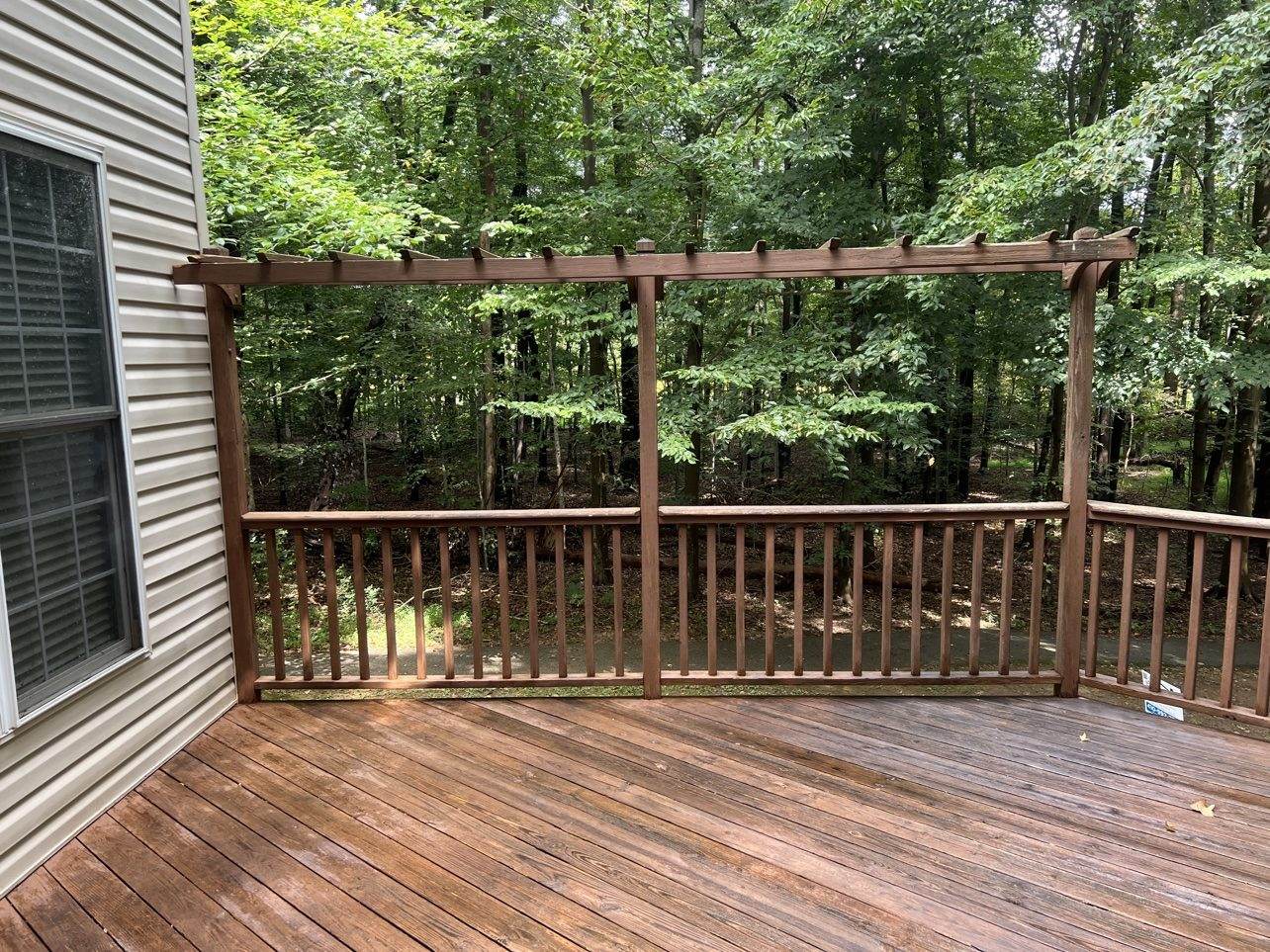
The starting point of every restoration. This isn't a quick pass with a garden hose — it's a thorough cleaning that strips grayed fibers, mildew, algae, and embedded dirt, followed by a wood brightener to neutralize the wash, even the color, and reopen the wood grain for staining.
Maryland factors in here: our humidity means mildew is practically guaranteed on any shaded or north-facing deck, and our freeze-thaw cycles trap moisture in dirty wood, accelerating rot. Prep is not optional in this climate — it's the foundation the whole job stands on. A contractor who quotes stain without washing and brightening is selling you a two-year stain instead of a five-year one.
2. Sanding: $200–$500
Sanding smooths raised grain, removes the last of the old finish, and knocks down the fuzziness that washing leaves behind. It's the step most rushed jobs skip, and it's the one you'll feel every barefoot summer evening. For a deck with heavy grain raise or significant old-stain remnants, this is a half-to-full day of labor.
3. Stain / Seal: $1.50–$3.50 per square foot
For a 300 sq ft deck, that's roughly $450–$1,050 in material and application. The range depends on:
- Stain type. Semi-transparent penetrating stain is our go-to for pressure-treated pine — it protects deep without looking painted. Solid stains cost similar but sit on the surface and peel faster. Budget stains fail sooner; the premium ones genuinely last 4–6 years in Maryland weather instead of 2–3. Product recommendationpremium semi-transparent deck stain Affiliate link placeholder — real link added later.
- Two coats vs. one. Quality work means two coats with proper dry time. A one-coat job is the most common shortcut in this business.
- Railings. They eat more stain per square foot than decking — all those balusters and posts have a lot of surface area. Expect railings to add 25–40% to the stain line item.
premium semi-transparent deck stain
Affiliate link placeholder — real link added later.4. Selective Board Replacement: $8–$20 per board
Replacing individual rotten or split boards is the most misunderstood line item in deck restoration. Homeowners often think "a few boards" means cheap; contractors sometimes quote it as "per board" without context. Here's the reality:
- A 16-foot 5/4" x 6" pressure-treated deck board runs $12–$25 at the lumberyard. Product recommendationpressure-treated decking boards Affiliate link placeholder — real link added later.
- Installed, replacing a single board typically lands at $25–$60 depending on fastener type, access, and whether the board is screwed or nailed down.
- A restoration with 5–10 replacement boards adds $250–$600 to the job. That's normal and expected on a 10-year-old deck.
- If the count is 20+ boards, ask whether partial redecking (replacing all surface boards on the existing frame) would be smarter — it often costs less per board once the crew is mobilized.
pressure-treated decking boards
Affiliate link placeholder — real link added later.5. Railing Work: $300–$1,200
Railings are the safety item and the visual focal point, so they get their own line. Restoring railings means:
- Tightening or re-fastening loose posts (often with structural screws instead of nails — nails backing out is the classic culprit).
- Replacing rotten post bases or individual balusters.
- Staining the full railing system.
If the railing is beyond saving — widespread rot in posts or the whole thing wobbles at the base — a railing rebuild is a separate conversation at $2,000–$4,000.
Putting It Together: A 300 Sq Ft Example
For a typical ~300 sq ft pressure-treated pine deck in Howard County, in average condition (mildew, graying, worn stain, 5–8 boards to replace, railings that need work):
| Line item | Range |
|---|---|
| Wash + brighten | $350–$550 |
| Sanding | $200–$450 |
| Stain/seal (deck + railings) | $600–$1,050 |
| Board replacement (5–8 boards) | $250–$500 |
| Railing tune-up | $200–$400 |
| Total | $1,600–$2,950 |
Most professional restorations in our area land between $1,800 and $3,500. Heavily mildewed decks, lots of board replacement, or larger footprints push it up; clean, simple decks come in lower.
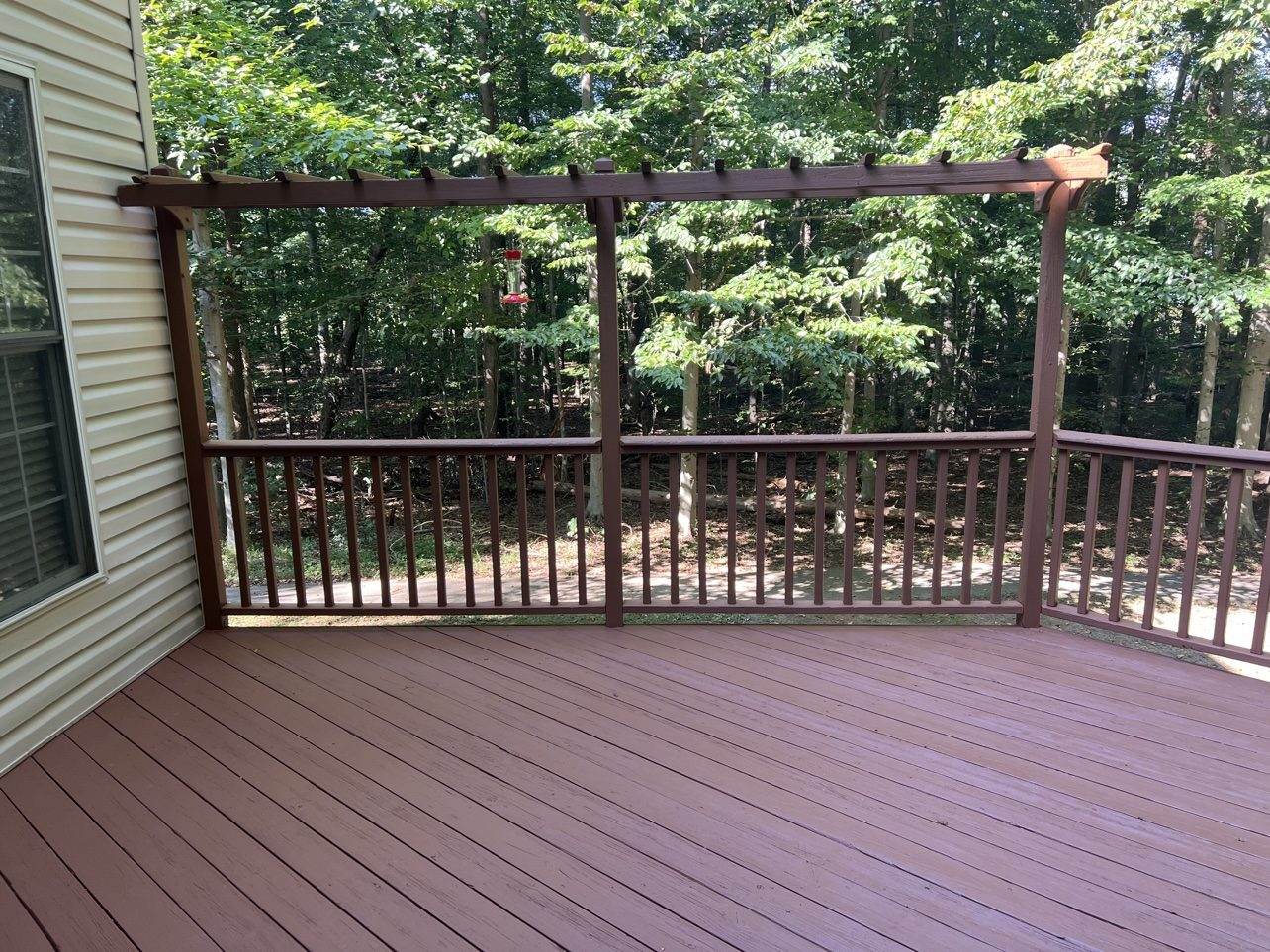
For context: a full replacement of the same 300 sq ft deck runs $12,000–$20,000+. Restoration is typically 15–25% of replacement cost.
DIY vs. Pro: The Real Math
A DIY restoration for that same 300 sq ft deck:
- Wash rental or pressure washer: $75–$150 (rental) or $200+ (buying) Product recommendationpressure washer Affiliate link placeholder — real link added later.
- Cleaner and brightener: $60–$100
- Sandpaper, sander rental: $50–$100
- Quality stain (two coats on 300 sq ft + railings): $250–$450
- Replacement boards and screws: $150–$300
- Materials total: roughly $600–$1,100, plus a full weekend (or two) of labor.
pressure washer
Affiliate link placeholder — real link added later.So why do DIY stain jobs fail so often? It almost never comes down to the stain application — it's the prep. DIY jobs typically skip or shortchange one of three things:
- The wash is too light. A garden hose or a single quick pass doesn't remove the grayed fibers, and stain sprayed over them bonds to dead wood. It peels within a year.
- The brightener is skipped. Most DIYers have never heard of it. Without it, the pH of the wood is off and the stain absorbs unevenly — patchy results and a shorter life.
- The weather window is missed. Stain applied in direct 90° sun, or when rain is 12 hours out, fails. Maryland's humidity means you need the right 48-hour window — morning application, dry forecast, moderate temperatures.
A pro is mostly paying for prep knowledge and the discipline to do it right. If you're handy and patient enough to wash, brighten, sand, and wait for the right weather, DIY can genuinely work. If you want to skip to the fun part — most people do — that's where the failures come from.
Maryland-Specific Factors That Move the Price
- Pressure-treated pine is the norm. Our decks are overwhelmingly Southern yellow pine, which is soft, porous, and thirsty. It stains beautifully when prepped right and fails fast when it isn't. No mystery — it's just the material.
- Humidity and mildew. Shade-covered decks in Maryland grow mildew like clockwork. Heavy mildew adds wash time and sometimes a second wash pass. If your deck sits under trees, budget toward the higher end of the wash range.
- Freeze-thaw. Water trapped in dirty, unsealed wood expands and cracks fibers through winter. A proper restoration before winter is one of the cheapest ways to extend a deck's life in this climate.
- Permit and HOA reality check. Restoration rarely needs a permit (no structural change), but some HOAs in Howard County require approval for color changes — worth a two-minute check before you pick a stain color.
What a Fair Quote Looks Like
When you get estimates, ask for the line-item breakdown. You want to see wash/prep separated from stain, the board replacement count, and what's included for railings. Three red flags:
- No mention of brightening or sanding. It's a spray-and-go job.
- One lump sum with no detail. You can't compare quotes without line items.
- Suspiciously low price. If someone quotes $800 for a full restoration, they're cutting prep — and prep is the whole job.
Every deck prices differently — size, condition, and how much structure is involved. Use the line items above to sanity-check any quote you get: a good one will break the job down the same way.